
What “Supervised Use” Means (and Why It Matters)
In legal work, “supervised use” means AI output is treated as draft material that must be reviewed, verified, and approved by a responsible human before it becomes work product.
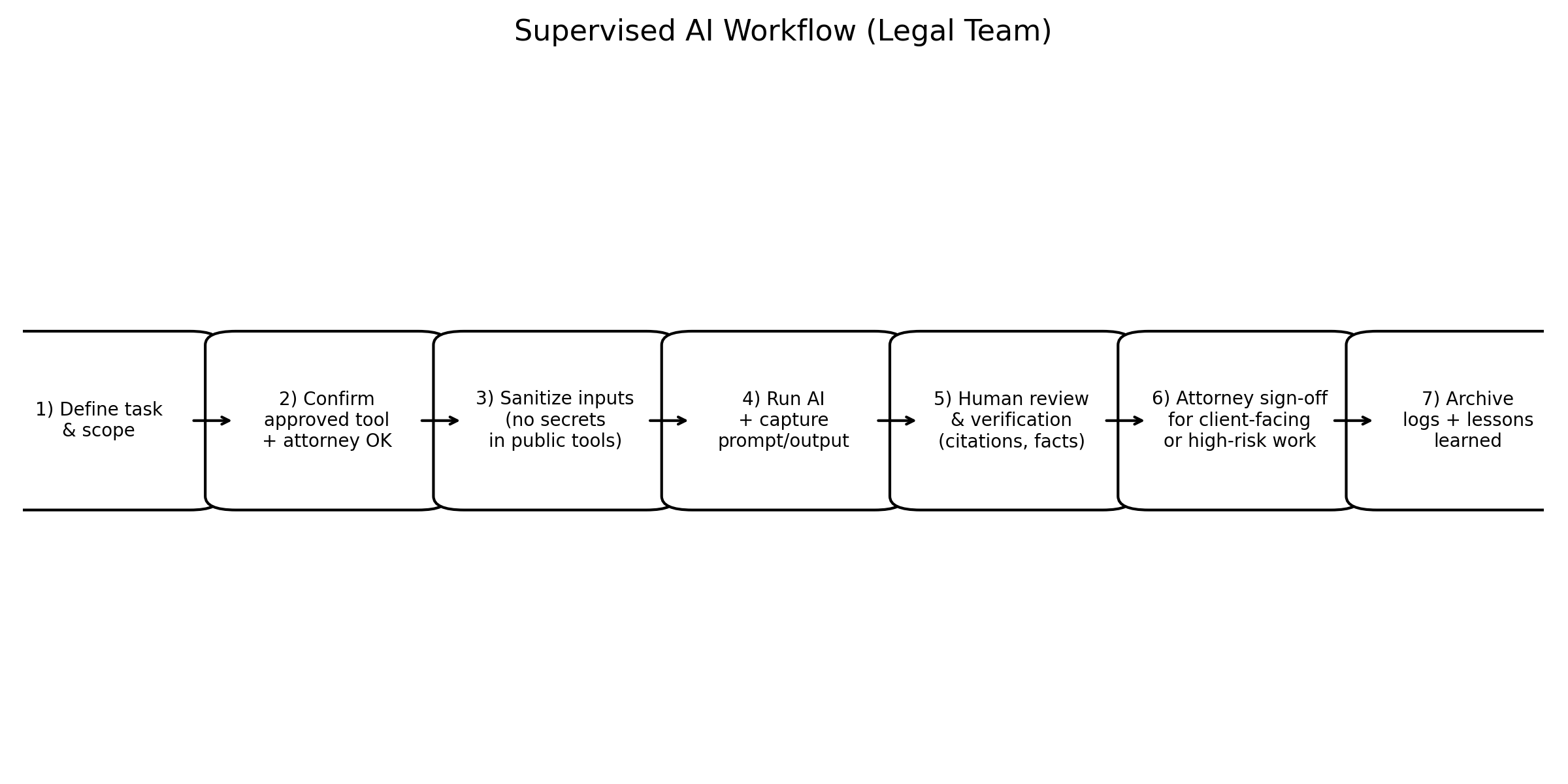
Why supervision is required
- Responsibility does not transfer to the tool. The legal team owns accuracy, confidentiality, and client impact.
- Errors can be invisible. AI may be wrong in subtle ways that look credible.
- Risk varies by task. A formatting draft is not the same as a filing or client advice.
Supervision roles (clear division of responsibility)
| Role | What they can do | What must be escalated |
|---|---|---|
| Staff / paralegal | Drafting summaries, organizing documents, creating checklists, formatting | Advice, strategy, privilege calls, court filings, client-facing messaging |
| Supervising attorney | Approves high-impact work; validates research and citations; manages client communications | N/A (attorney is final accountable reviewer) |
| Legal ops / IT | Tool configuration; access controls; audit logging; vendor vetting | Ethics decisions; case-specific approvals |
When is “unsupervised” use acceptable?
In most firms, unsupervised use should be limited to non-sensitive, low-impact activities (e.g., rewriting a generic policy paragraph for clarity). If the output can affect a client, a deadline, privilege, or a tribunal, supervision is required.
Minimum supervision checklist (attorney-led)
- Was the task classified correctly (risk tier + audience)?
- Were confidentiality safeguards followed (tool approved; data minimized)?
- Were the output’s key claims verified against primary sources?
- Is the work product traceable (prompt + sources + reviewer documented)?
- Would you be comfortable explaining the workflow to a client, court, or regulator?
Practice tip: If you cannot re-create the output, you cannot defend it. Supervision requires repeatability.