
Implementation Playbook: Policy, Training, Governance
Ethical AI use becomes real when you operationalize it: written policies, approved tools, training, monitoring, and continuous improvement.
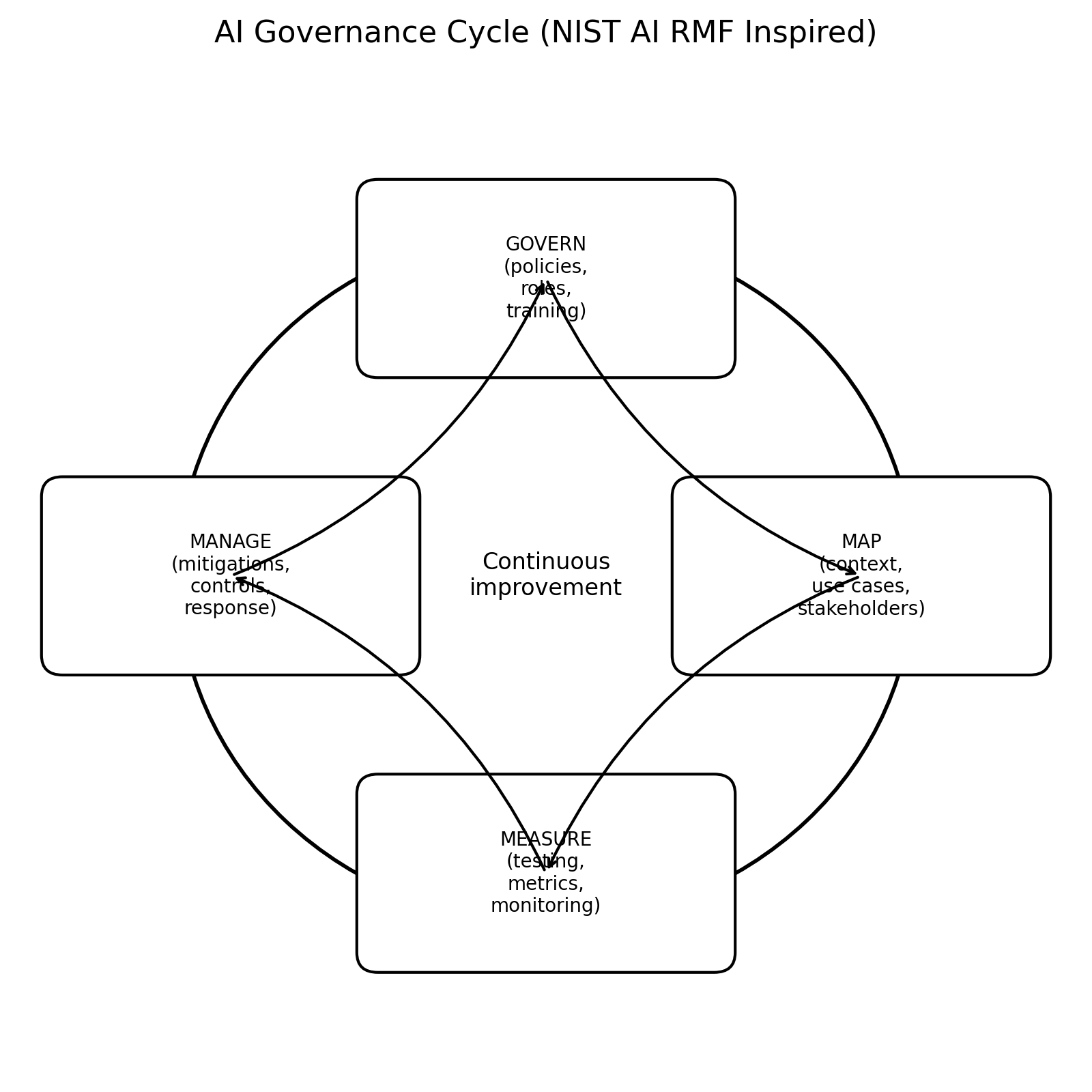
Step 1: Create an “AI use policy” (minimum components)
- Scope: which teams and matters are covered
- Approved tools list: and how exceptions are approved
- Task tiers: low / medium / high with required controls
- Confidentiality rules: what can/can’t be entered; de-identification standards
- Verification rules: court-facing and client-facing minimum checks
- Audit trail: what must be documented and where
- Incident response: owner, steps, and notification triggers
Step 2: Train by scenario
Policies are read once. Scenarios are remembered. Run scenario labs quarterly using real workflows (scrubbed of client identifiers).
Step 3: Establish governance owners
| Owner | Responsibilities |
|---|---|
| Practice lead / supervising attorney | Ethics decisions; supervision standards; client communication guidance |
| Legal ops / IT | Tool approvals, configuration, access, logging, vendor management |
| Risk / compliance | Incident response coordination; training program; policy updates |
Step 4: Monitor and measure
- Track AI usage by task type (not by secrets)
- Track incidents and near-misses (hallucinations caught before filing)
- Sample audit trails for completeness
- Update training after tool changes and new guidance
Regulatory trend watch (why governance matters)
- Regulators and bar associations increasingly expect AI literacy, documented controls, and responsible data practices.
- International frameworks emphasize governance, transparency, privacy, and risk management across the AI lifecycle.
Practice tip: Treat AI like a new associate: onboarding, supervision, and ongoing evaluation are required.