Course Content
Module 1: Introduction to Large Language Models (LLMs) in Law
What LLMs Are (and Aren’t): A Lawyer‑Friendly Mental Model Legal Use Cases & Risk Tiers
0/5
Module 2: Fundamentals of Effective Prompt Design for Legal Tasks
The ICI Framework: Intent + Context + Instruction Advanced Prompt Techniques for Legal Work Prompt Debugging: Lost Middle, Ambiguity, and Token Hygiene
0/5
Module 3: Verifying and Validating AI-Generated Legal Content
Validation Mindset: Why Verification Is Non‑Negotiable Hallucinations in Legal Content: Red Flags & Fixes Bias, Relevance, and Fit: Quality Control Beyond Accuracy
0/5
Module 4: Ethical Considerations and Responsible AI Use in Law
Confidentiality & Data Handling: What You Can Paste Into AI Competence, Supervision, and Accountability with AI Build Your Firm AI Policy Template
0/5
Module 5: Building a Personal Prompt Library and Future Trends
Designing a Personal Prompt Library Future Trends: Specialized Legal Models, RAG, and Agents Build 10 High-Value Prompts You’ll Actually Reuse Final Assessment: Applied Prompt Engineering Scenario
0/5
Prompt Engineering for Legal Applications

Prompt Debugging: Lost Middle, Ambiguity, and Token Hygiene

When prompts get long, models can overlook details—especially if critical constraints sit in the middle of the prompt. Put key rules up front and repeat them at the end.
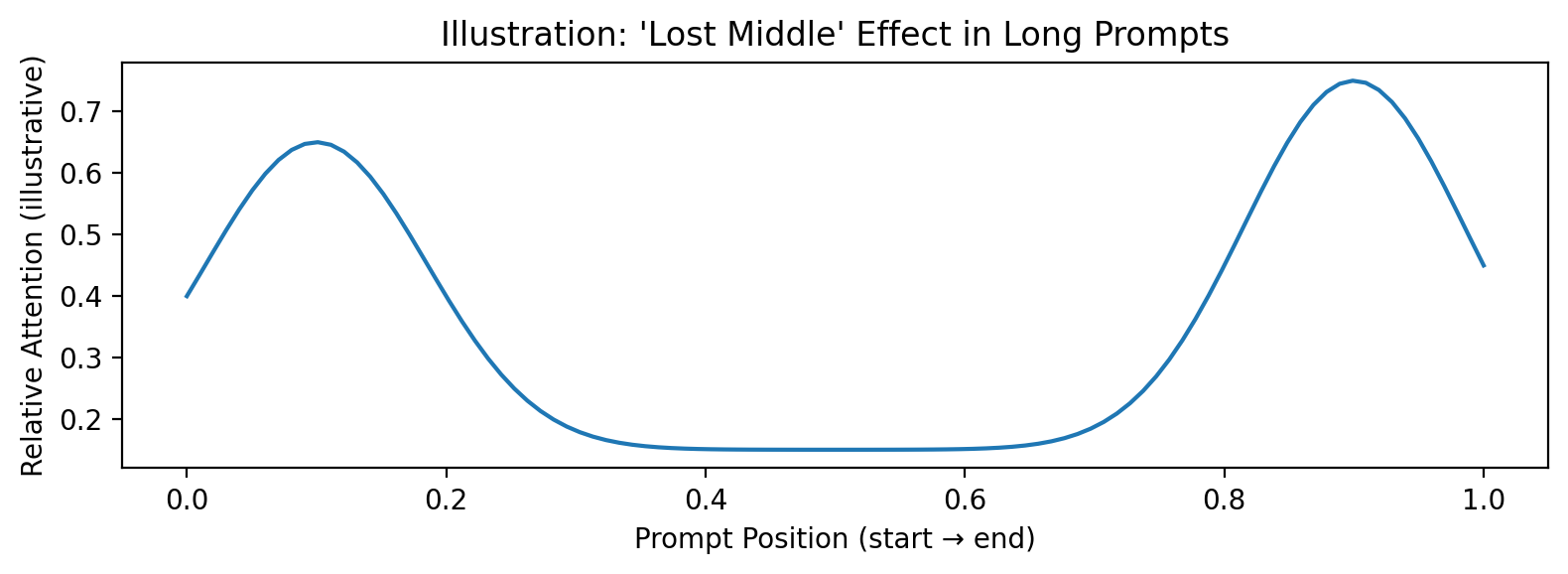
Long prompts can hide key constraints in the middle. Repeat critical instructions.

Common failure modes

  • Ambiguity: the model guesses what you meant.
  • Lost middle: important constraints get ignored.
  • Overload: too much irrelevant context dilutes the signal.

Debugging checklist

  1. Move the key question to the top.
  2. Reduce context to only what is necessary.
  3. Add explicit constraints (“Do not invent citations”).
  4. Ask for a short answer first, then expand.

A practical pattern: draft → critique → revise

Step 1: Draft.
Step 2: Critique the draft for factual risk, missing issues, and clarity.
Step 3: Revise using the critique.