A.I.

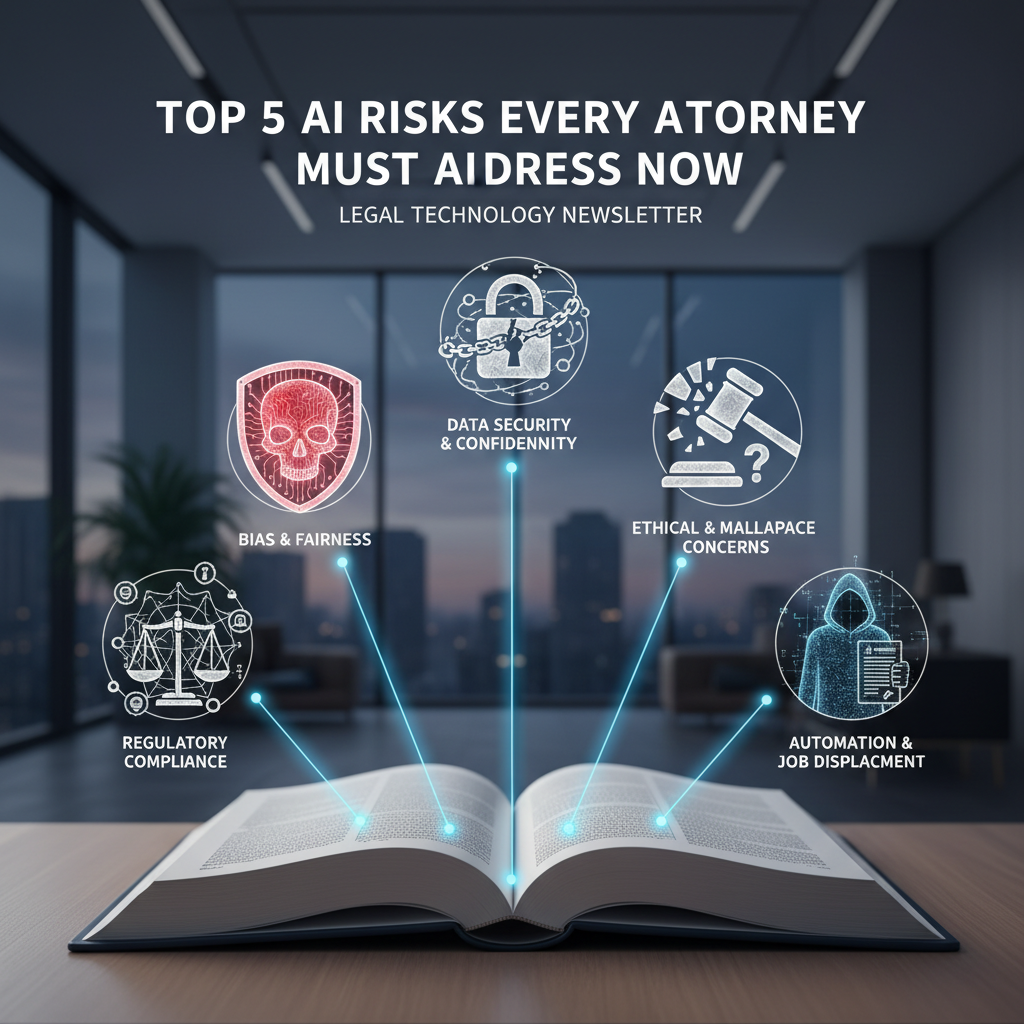
Top 5 AI Risks Every Attorney Should Know
The Hidden Landmines: Top 5 AI Risks Every Attorney Should Know Table of Contents Why AI Risk Management Matters Now Visual: AI Risk Heatmap for

The Hidden Landmines: Top 5 AI Risks Every Attorney Should Know Table of Contents Why AI Risk Management Matters Now Visual: AI Risk Heatmap for

Case Studies of Copilot Enhancing Day-to-Day Legal Tasks Table of Contents Introduction: Why A.I. Matters in Today’s Legal Landscape Case Studies: Copilot in Daily Legal

AI Governance Frameworks Tailored for Legal Departments Artificial intelligence is reshaping legal work—from contract analysis and eDiscovery to legal research and client communications. Yet the

Legal Ops Playbooks: Operationalizing Copilot Across Teams Artificial intelligence has moved from experimentation to expectation. Clients want faster cycle times and better transparency; regulators expect
The legal profession stands at a critical juncture in its relationship with artificial intelligence. As AI adoption in law firms has tripled from 11% in 2023 to 30% in 2024, according to the American Bar Association’s Legal Technology Survey Report [1], the imperative for establishing robust ethical frameworks and compliance protocols has never been more urgent. This comprehensive report examines the intersection of AI technology and legal ethics, providing attorneys and legal technology professionals with essential guidance for navigating this rapidly evolving landscape.
Artificial Intelligence (AI) is rapidly transforming the legal profession, offering unprecedented opportunities for efficiency, accuracy, and competitive advantage. This comprehensive guide provides attorneys and legal technology professionals with actionable insights for implementing AI solutions in legal practice.

In recent years, Large Language Models (LLMs) have emerged as transformative technologies across industries, with the legal sector experiencing particularly significant impacts. Law firms and legal departments are increasingly adopting LLM solutions to enhance efficiency, improve decision-making, and deliver more value to clients.

Artificial Intelligence (AI) has emerged as a transformative force in legal operations, offering unprecedented opportunities to enhance efficiency, reduce costs, and improve service delivery. This report presents a comprehensive analysis of the Return on Investment (ROI) of AI systems in legal operations, drawing on recent authoritative research, case studies, and industry benchmarks.

The rapid advancement of artificial intelligence (AI) technology is transforming the legal profession in profound ways. From document review and contract analysis to legal research and predictive analytics, AI tools are increasingly becoming integral to legal practice. As these technologies continue to evolve, legal professionals face the challenge of understanding the technical terminology associated with AI to effectively evaluate, implement, and regulate these tools.

Don’t see what you’re looking for? Our team can develop custom resources tailored to your organization’s specific needs and challenges. Whether you need specialized training materials, implementation guides for specific practice areas, or ROI analysis frameworks, we can create resources that address your unique requirements.